

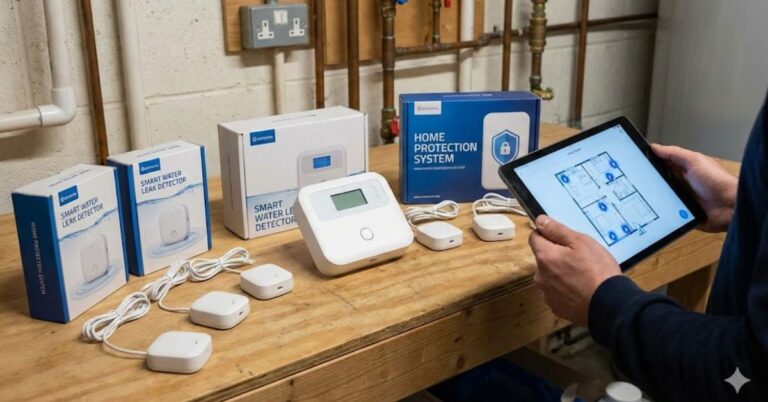
Imagine coming home after a long weekend to find your basement flooded or your kitchen ceiling dripping because a $10 washing machine hose failed. It’s a homeowner’s worst nightmare, yet water damage remains one of the most common and expensive home insurance claims.
Fortunately, technology has a solution. The best water leak detector can alert you to moisture the second it happens, saving you thousands of dollars in repairs and mold remediation.
Table of Contents
Why Every Home Needs a Water Leak Sensor?
Water damage isn’t just about the mess; it’s about the speed. A burst pipe can spill gallons of water per minute. Even a “slow” leak behind a dishwasher can rot subflooring before you ever see a puddle.
Investing in a smart water leak detector offers three key benefits:
- Early Detection: Catch leaks before they become disasters.
- Remote Monitoring: Get alerts on your phone even when you’re on vacation.
- Insurance Discounts: Many insurance providers offer premium discounts for homes equipped with active leak detection systems.
Pro Tip: The most dangerous leaks are the ones you can’t see. Placing sensors near water heaters, behind toilets, and under sinks provides the best coverage.
Top Picks: The Best Water Leak Detectors of 2025
We have categorized these picks based on budget, ecosystem (smart home compatibility), and functionality.
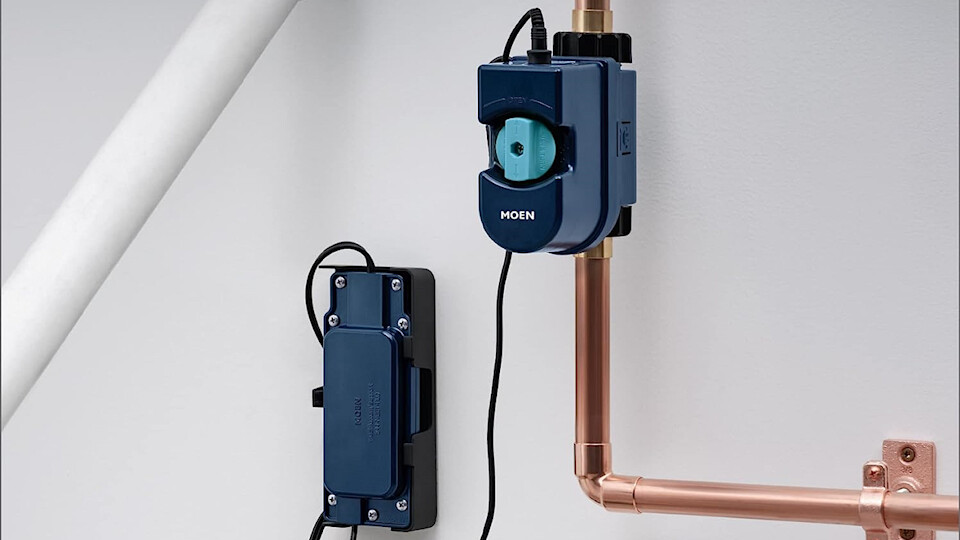
1. Best Overall Smart Shut-Off Valve: Moen Flo Smart Water Monitor
If you want total peace of mind, a simple sensor isn’t enough. You need a device that can stop the water for you. The Moen Flo installs directly onto your main water line. It monitors pressure, flow rate, and temperature 24/7.
- Why it wins: If it detects a catastrophic failure (like a burst pipe), it automatically shuts off the water supply to the entire house.
- Smart Features: It runs daily “health tests” on your plumbing to detect micro-leaks that regular sensors might miss.
- Best For: Homeowners willing to invest in a permanent, whole-home solution.
2. Best Budget Wi-Fi Sensor: Govee Wi-Fi Water Sensor
You don’t need to spend a fortune to protect your basement. The Govee Wi-Fi Water Sensor is an affordable, standalone option that doesn’t require a hub.
- How it works: It connects directly to your home Wi-Fi. If the sensors on the bottom touch water, it sounds a loud 100dB alarm and sends a notification to your smartphone.
- Pros: Very affordable multipacks available; simple setup.
- Cons: Battery-operated (requires checking); no automatic shut-off.
3. Best for Apple HomeKit: Eve Water Guard
For those deep in the Apple ecosystem, the Eve Water Guard is the gold standard. It uses Thread technology for a reliable connection that doesn’t clog up your Wi-Fi bandwidth.
- Unique Feature: Instead of a spot sensor, it uses a 6.5-foot sensing cable. You can wrap this around a water heater or run it along a baseboard, providing a wider area of detection.
- Integration: seamless integration with the Apple Home app for automation (e.g., turn lights red when a leak is detected).
Comparing Connectivity: Wi-Fi vs. Hub-Based Sensors
When shopping for the best water leak detector, you will generally encounter two types of connectivity. Understanding the difference is crucial for reliability.
Wi-Fi Detectors
These connect directly to your router.
- Pros: No extra equipment needed; easy to set up.
- Cons: Can drain batteries faster; if your Wi-Fi goes down, you might miss an alert.
Hub-Based (Zigbee/Z-Wave/Thread)
These connect to a central hub (like an Amazon Echo, Samsung SmartThings, or a proprietary bridge).
- Pros: Better battery life; creates a “mesh” network for better range in large homes; often more reliable than Wi-Fi.
- Cons: Requires a hub, which may increase the initial cost.
Note: If you are already setting up a security system, check if your provider offers branded leak sensors to keep everything in one app.
Key Features to Look For:
Before you buy, check for these essential specs to ensure you are getting a reliable device.
- Audible Alarm: An app notification is great, but a loud siren (85dB+) is essential if you are home and your phone is on silent.
- Cable Probes: Some detectors come with a probe on a cord. This is vital for tight spaces, allowing you to mount the battery unit on the wall while lowering the sensor into a sump pump pit or behind a washing machine.
- Temperature / Freeze Monitoring: Frozen pipes are a major cause of winter water damage. Look for sensors that alert you when the temperature drops below 41°F (5°C).
- Power Source: Plug-in units never run out of battery but won’t work during a power outage (unless they have battery backup). Battery-operated units are flexible but require maintenance.
Where to Place Your Leak Detectors:
To maximize effectiveness, strategic placement is key. Don’t just toss them on the floor; place them where risk is highest.
- The Water Heater: These are prone to rusting and leaking as they age.
- Under the Kitchen Sink: The garbage disposal and dishwasher lines are common failure points.
- Behind the Toilet: A loose supply line or a cracked tank can flood a bathroom quickly.
- The Washing Machine: Rubber hoses degrade over time.
- Sump Pump: A sensor inside the pit can warn you if water levels rise too high before it overflows.
Conclusion:
Water damage is stressful, expensive, and invasive but it is also largely preventable. By installing the best water leak detector for your specific needs, you are adding a critical layer of defense to your home.
If you are looking for a quick, budget-friendly fix, grab a multi-pack of Govee Wi-Fi sensors and place them near your appliances. If you want comprehensive protection, invest in a smart shut-off valve that monitors your entire plumbing system.
Don’t wait for the puddle to appear. Secure your home today.
Frequently Asked Questions:
Do smart water leak detectors work without Wi-Fi?
Yes and no. Most detectors have a built-in siren that will sound regardless of internet connection. However, to receive a notification on your phone or to trigger a smart water shut-off valve, an active internet connection is usually required.
Are water leak detectors worth it?
Absolutely. Considering that the average cost of a non-weather-related water damage claim is over $10,000, spending $50 to $500 on detection gear is a high-value investment.
Can a leak detector shut off my water automatically?
Only if you buy a “smart water shut-off valve” (like the Moen Flo or Phyn Plus) or a retro-fit valve actuator that turns your existing handle. Standard “puck” sensors can only alert you, they cannot stop the water unless they are paired via a smart home hub to a shut-off device.
How long do the batteries last in these sensors?
Most Zigbee or Z-Wave sensors can last 1–2 years on a coin cell battery. Wi-Fi sensors typically have shorter battery life (6–12 months) because Wi-Fi consumes more power.
