

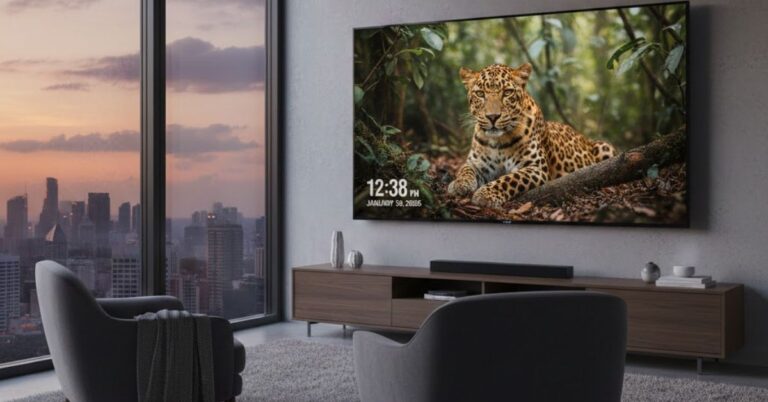
You are scrolling through Amazon or standing in the aisle at a big-box store, and you see it: a massive 65-inch 4K TV with specs that rival the big brands, but for half the price. It’s a Hisense. But before you tap your card, that nagging question pops up: Are Hisense TVs good? Or are they just cheap?
As a content strategist who has analyzed the display market for over a decade, I’ve seen Hisense evolve from a “budget bin” option into a legitimate heavyweight contender. In 2025, the short answer is yes Hisense TVs are incredibly good for the price. However, they aren’t perfect.
If you want the best “bang for your buck” in the industry, Hisense is hard to beat. But if you value top-tier quality control and flawless motion processing above all else, there are caveats you need to know.
Table of Contents
The Short Answer: Is Hisense a Good Brand?
If you are looking for a simple “yes or no,” here is the verdict:
- Yes, if: You want premium features like Mini-LED, 144Hz refresh rates, and high brightness without paying the “Samsung tax.” They are fantastic for gamers and bright living rooms.
- No, if: You are a videophile who demands perfect color accuracy out of the box, or if you watch a lot of low-quality cable TV (where upscaling matters).
- The Caveat: Quality control can be less consistent than Sony or LG. We always recommend buying an extended warranty with a Hisense TV just to be safe.
Why Hisense TVs Are So Popular (The Pros)
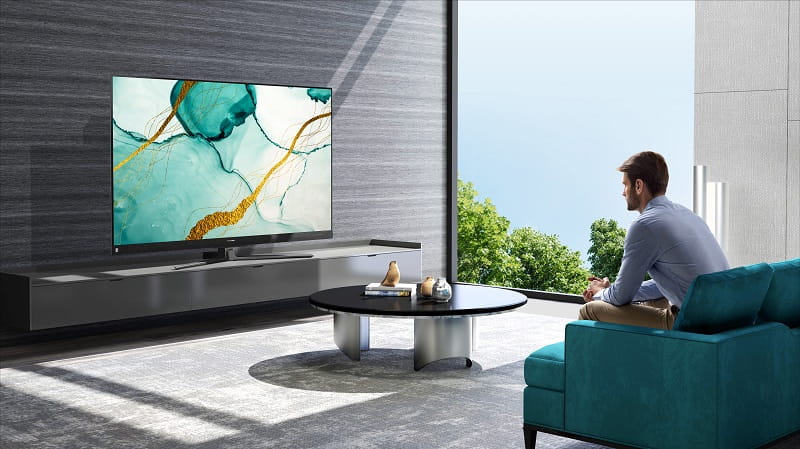
Hisense has aggressively cornered the market by putting high-end technology into mid-range TVs. Here is why they are flying off the shelves.
1. Unmatched Price-to-Performance Ratio
The biggest selling point is value. To get Mini-LED technology (which offers better contrast and brightness) from a brand like Sony or Samsung, you usually have to spend upwards of $1,500. Hisense offers this in their U-Series (U6, U7, U8) often for under $800.
2. High Brightness (The “Light Cannon”)
Models like the Hisense U8N are famous for being “light cannons.” If you have a living room with lots of windows and sunlight, a standard OLED TV might look too dim. Hisense TVs punch through glare effortlessly, making them one of the best choices for daytime viewing.
3. Next-Gen Gaming Features
Gamers love Hisense. Even their mid-range models often include:
- HDMI 2.1 Bandwidth: Crucial for PS5 and Xbox Series X.
- 144Hz Refresh Rate: Smoother motion than the standard 60Hz found on budget LG or Samsung models.
- Game Mode Pro: Automatically minimizes input lag.
Note: [Insert Internal Link 1 here with anchor: Check out our guide on the best gaming TVs] to see how Hisense stacks up against dedicated gaming monitors.
The Common Complaints (The Cons)
To maintain a balanced perspective, we have to look at where Hisense cuts corners to keep prices low.
1. Motion Processing and Upscaling
This is the main differentiator between a $700 Hisense and a $2,000 Sony. If you are watching 4K content on Netflix, the Hisense looks amazing. However, if you are watching old DVDs, low-bitrate cable news, or 720p sports broadcasts, the Hisense processor struggles to clean up the image as well as premium brands. You might see some “noise” or artifacts in the picture.
2. Viewing Angles
Most Hisense TVs use VA panels. These panels are great for deep blacks and contrast (making movies look cinematic), but they have narrow viewing angles. If you have a wide seating arrangement, the people sitting on the far sides of the couch might see a washed-out image.
3. The “Panel Lottery”
“Panel lottery” is an enthusiast term referring to quality control consistency. While most units are fine, Hisense has a slightly higher rate of “dirty screen effect” (DSE) where the screen looks slightly patchy during panning shots in sports compared to premium brands.
Hisense vs The Competition:
How does Hisense fare when we put it head-to-head with its biggest rivals?
Hisense vs TCL
This is the heavyweight fight of the budget world. Both brands are Chinese manufacturing giants that offer incredible value.
- Hisense tends to win on raw brightness and gaming specs in the mid-range.
- TCL (specifically their Q-series) often has slightly better color accuracy out of the box and sometimes runs a smoother Google TV interface.
- Verdict: It’s a toss-up. Buy whichever one is currently on sale.
Hisense vs Samsung
Samsung is the market leader, but their low-end models (like the Crystal UHD series) are often overpriced for the performance.
- A Hisense U7N will absolutely destroy a budget Samsung Crystal UHD in picture quality, contrast, and brightness.
- However, a high-end Samsung Neo QLED will beat the Hisense in processing, design, and longevity but it will cost twice as much.
[Insert Internal Link 2 here with anchor: Read our full Hisense vs Samsung comparison] for a deeper dive into the specs.
Best Hisense Models to Buy in 2025:
Hisense uses a confusing naming scheme, so let’s simplify it. They generally break their lineup into the U-Series (Premium/Good) and the A-Series (Budget/Basic).
1. The Flagship: Hisense U8 Series (U8N)
This is the TV that gets all the rave reviews. It features Mini-LED Pro technology, thousands of local dimming zones, and blinding peak brightness. It rivals TVs that cost $2,000+.
- Best for: Home theater enthusiasts and bright rooms.
2. The Gamer’s Choice: Hisense U7 Series (U7N)
The U7 sits in the “Goldilocks” zone. It keeps the 144Hz refresh rate and gaming features of the U8 but sacrifices a bit of brightness and dimming zones to lower the price.
- Best for: PS5/Xbox gamers and sports fans.
3. The Budget King: Hisense U6 Series (U6N)
This is the entry-level for Mini-LED. It is usually a 60Hz panel (so not ideal for high-end PC gaming), but it offers far better picture quality than almost any other TV in the $400-$500 range.
- Best for: A bedroom TV or casual streaming.
4. The “Avoid” List: A-Series (A6/A7)
These are standard, cheap 4K TVs without local dimming. They are fine for a guest room or a digital signage display, but they won’t give you that “wow” factor.
Reliability: How Long Do Hisense TVs Last?
This is the most common semantic question we get. Do Hisense TVs last as long as Sony or Samsung?
Generally, a Hisense TV should last between 5 to 7 years of regular use. However, online forums like Reddit do show a slightly higher volume of reports regarding mainboard failures or backlight issues after the 3-year mark compared to legacy brands.
Pro Tip: Use the money you saved on the TV price to buy a 5-year protection plan. Even with the cost of the warranty included, you are likely still paying less than you would for a comparable Samsung or Sony.
Conclusion:
So, are Hisense TVs good? Yes. They have disrupted the market for a reason. They offer 90% of the performance of a flagship TV for 50% of the price.
If you are willing to accept slightly worse motion processing on low-quality content and the risk of the “panel lottery,” a Hisense U8 or U7 is arguably the smartest purchase you can make in 2025. Just remember to check your specific model number, as the performance gap between their top-tier U-Series and budget A-Series is massive.
Frequently Asked Questions:
1. Who makes Hisense TVs?
Hisense is a Chinese multinational electronics manufacturer. They are one of the largest TV manufacturers in the world and actually own the rights to the Toshiba brand for TVs in the US market.
2. Is Hisense better than Samsung?
In the budget and mid-range categories, Hisense often offers better hardware (Mini-LED, Local Dimming) than Samsung. However, Samsung’s premium flagship models generally have superior image processing and build quality.
Do Hisense TVs have problems?
Common reported issues include “ghosting” in fast-motion sports, interface lag on the smart OS over time, and occasional backlight uniformity issues.
Is Hisense good for gaming?
Absolutely. The U7 and U8 series are considered some of the best budget gaming TVs on the market thanks to their support for 144Hz, VRR (Variable Refresh Rate), and ALLM (Auto Low Latency Mode).
What is the difference between ULED and QLED? QLED (Quantum Dot) is a technology used to enhance color. ULED (Ultra LED) is Hisense’s marketing term for their suite of picture enhancements, which includes QLED technology along with special algorithms for dimming and motion.
