

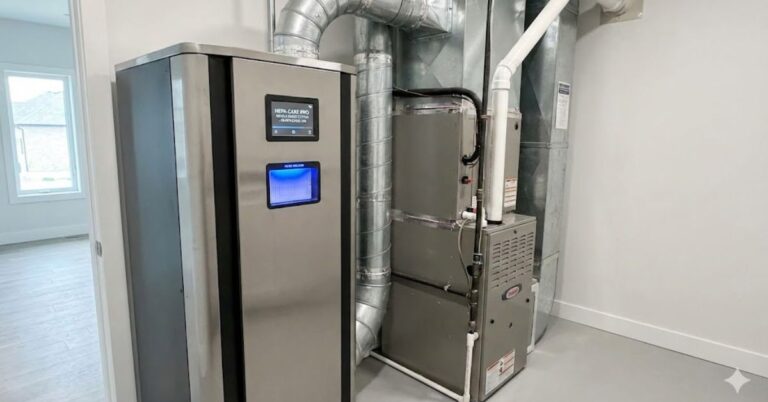
Does your home feel stuffy even after cleaning? Do allergies flare up the moment you step inside? You aren’t alone. With modern homes built tighter for energy efficiency, indoor pollutants like dust mites, pet dander, and volatile organic compounds (VOCs) get trapped inside, creating air that is often 2–5 times more polluted than outdoor air.
Finding the best whole house air purifier isn’t just about buying a gadget; it’s about reclaiming your health. But here is the confusion: “Whole house” can mean two very different things. It either refers to a powerful portable unit capable of cleaning large open floor plans or a centralized system installed directly into your HVAC ductwork.
In this guide, we break down the top-rated options for both categories to help you decide which solution fits your home, budget, and health needs.
Table of Contents
Quick Top Picks at a Glance:
| Category | Product | Best For |
| Best Portable Overall | Blueair Blue Pure 211i Max | Open floor plans, ease of use, silence |
| Best for Smoke/Voc | Dyson Purifier Big+Quiet BP03 | Large rooms, formaldehyde removal |
| Best HVAC Integrated | AprilAire Model 5000 | Total home coverage, low maintenance |
| Best Medical Grade | IQAir HealthPro Plus | Severe asthma & allergies |
| Best Value Smart | Levoit Core 600S | Tech-lovers, budget-friendly power |
Portable vs HVAC-Integrated: Which Do You Need?
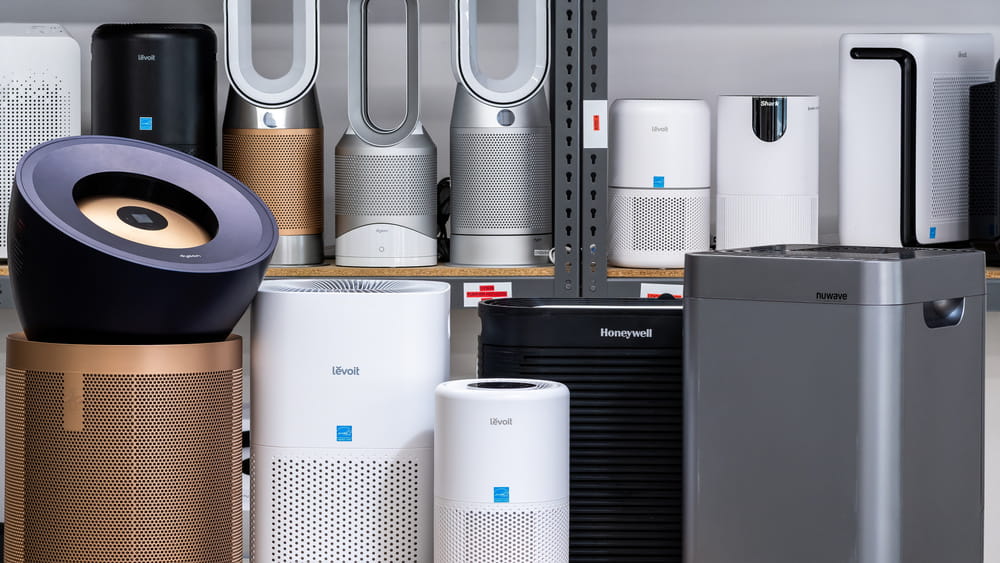
Before buying, you must choose between a standalone unit and a built-in system.
1. Portable Whole House Air Purifiers
These are plug-and-play devices designed to clean large areas (600–1,500+ sq. ft.).
- Pros: No installation required, portable (move from living room to bedroom), captures pollutants at the source.
- Cons: Takes up floor space, can be noisy at high speeds, usually requires one unit per floor.
- Best for: Renters, older homes without central air, or targeting specific problem areas.
2. HVAC (In-Duct) Air Purifiers
These are installed professionally into your furnace or air handler.
- Pros: Silent operation, invisible, filters 100% of the air circulating through your ducts, low maintenance.
- Cons: Expensive upfront cost ($1,000–$4,000+ installed), only works when the HVAC fan is running.
- Best for: Homeowners with central air, severe allergy sufferers, and those who want a “set it and forget it” solution.
Best Portable Whole House Air Purifiers (2026 Reviews)
If you want immediate relief without hiring a contractor, these heavy-duty portable units are the industry leaders.
1. Blueair Blue Pure 211i Max
Verdict: The best balance of performance, noise, and price for most homes.
This unit is a powerhouse for open-concept living spaces. It uses Blueair’s HEPASilent™ technology, which combines electrostatic and mechanical filtration to capture 99.97% of airborne particles without restricting airflow.
- Coverage: Up to 635 sq. ft. (5 air changes per hour) or 3,048 sq. ft. (1 air change per hour).
- Why we love it: It’s whisper-quiet and the washable pre-filter (available in different colors) catches large pet hair, extending the main filter’s life.
2. Coway Airmega 400S
Verdict: The “Smart” choice for dual-filtration.
The Airmega 400S pulls air from two sides, effectively doubling its intake capacity. Its smart mode adjusts fan speeds based on real-time air quality monitoring, saving energy when the air is clean.
- Key Feature: Max2 Filter (True HEPA + Activated Carbon) is excellent for removing cooking odors and smoke.
- Smart Tech: Compatible with Alexa and Google Assistant; provides real-time air quality reports via app.
3. Levoit Core 600S
Verdict: Best value for large spaces.
Levoit dominates the market for a reason. The Core 600S offers premium features like laser dust sensors and app control at a fraction of the cost of competitors.
- Performance: High Clean Air Delivery Rate (CADR) effectively handles dust, pollen, and wildfire smoke in rooms up to 3,000 sq. ft. (at 1 ACH).
- Note: Excellent sleep mode that turns off display lights and runs nearly silently.
4. IQAir HealthPro Plus
Verdict: The medical-grade gold standard.
If you have severe asthma, COPD, or extreme chemical sensitivities, this is the unit to buy. It uses HyperHEPA filtration, tested to trap particles 100x smaller than standard HEPA filters (down to 0.003 microns).
- Pros: Unmatched particle filtration; widely used in hospitals.
- Cons: Large, industrial design; expensive filter replacements.
Best HVAC-Integrated Air Purifiers:
For a truly “whole house” solution that filters air in every room simultaneously, consider these in-duct systems.
1. AprilAire Model 5000 Electronic Air Cleaner
Verdict: The long-standing champion of in-duct purification.
The AprilAire 5000 combines electrostatic technology with a traditional media filter. It charges particles entering the filter, making them “sticky” so they are trapped more easily.
- Efficiency: Traps 99% of airborne asthma triggers and 98% of particles down to 0.1 microns.
- Maintenance: Filters typically only need changing once a year.
- Installation: Requires professional HVAC installation.
2. Lennox PureAir™ S
Verdict: Best for chemical and odor removal.
This system is a “tri-hybrid” that combats all three major pollutant types: particles, germs, and odors. It uses a MERV 16 filter (hospital grade) paired with UVA light and a catalyst to destroy VOCs (volatile organic compounds) like formaldehyde.
- Standout Feature: Unlike passive filters, it actively destroys odors rather than just trapping them.
- Best For: Homes in high-pollution areas or owners sensitive to chemical off-gassing.
3. Carrier Infinity® Air Purifier
Verdict: Best “Capture and Kill” technology.
Carrier’s system doesn’t just trap germs; it electrocutes them. It uses high voltage to kill bacteria, viruses, and mold spores caught in the filter, preventing them from multiplying inside your HVAC system.
- Compatibility: Works best when paired with a Carrier Infinity HVAC system for seamless smart integration.
4. REME HALO® (In-Duct Ionizer)
Verdict: Best add-on for existing systems.
Technically an “active” air purifier, the REME HALO is installed in the supply plenum. It sends ionized hydro-peroxides into your living space to actively neutralize pollutants in the air and on surfaces.
- Note: This is often used in addition to a high-quality media filter, not as a replacement.
Key Buying Factors: How to Choose:
When shopping for the best whole house air purifier, ignore the marketing fluff and look at these specs:
1. CADR (Clean Air Delivery Rate)
Used for portable units, this number indicates how fast the unit cleans the air.
- Rule of Thumb: The CADR should be at least 2/3 of the room’s square footage. For a 600 sq. ft. living room, you want a CADR of 400+.
2. MERV Rating (For HVAC Systems)
The Minimum Efficiency Reporting Value measures how effectively a filter traps dust.
- Standard homes: MERV 8–11.
- Allergy sufferers: MERV 13–16.
- Warning: Don’t just shove a MERV 16 filter into an old furnace; the high resistance can damage your blower motor. Always consult an HVAC pro.
3. HEPA vs. “HEPA-Type”
Always look for True HEPA (H13 or H14) filters. These capture 99.97% of particles at 0.3 microns. Avoid “HEPA-type” or “HEPA-style” marketing, which often indicates inferior filtration.
4. Activated Carbon
If your main concern is odors, smoke, or VOCs (gases), you need a filter with a substantial amount of activated carbon (measured in pounds, not just a thin coating).
Conclusion: What is the Best Choice for You?
If you are renting or need immediate relief for a specific large area, the Blueair Blue Pure 211i Max or Coway Airmega 400S are your best bets. They are effective, easy to set up, and require zero renovation.
However, if you own your home and suffer from chronic allergies, investing in an AprilAire Model 5000 or Lennox PureAir S is a game-changer. These systems turn your heating and cooling system into a 24/7 lung for your house, ensuring that every breath you take in the kitchen, bedroom, or basement is clean.
Ready to improve your indoor air quality? Start by checking your current HVAC filter size or measuring your primary living space to see which model fits your needs today.
Frequently Asked Questions:
Is a whole house air purifier worth it?
Yes, especially if you have pets, allergies, or live in areas prone to wildfires/pollution. While portable units are great for single rooms, a whole-house HVAC system ensures consistent air quality throughout every room in the building.
How much does it cost to install a whole house air purifier?
- Portable units: $200–$900 (one-time cost).
- HVAC integrated media cabinets: $400–$800 (installed).
- Electronic/UV HVAC systems: $1,500–$4,000 (installed).
Do air purifiers help with mold?
Yes. HEPA filters capture airborne mold spores, preventing them from landing and growing on new surfaces. However, they cannot remove active mold growing on walls; you must remediate the moisture source first.
Can I just put a better filter in my furnace?
Be careful. High-efficiency filters (MERV 13+) are thicker and more restrictive. If your furnace isn’t built for high static pressure, a dense filter can restrict airflow, causing the system to overheat or freeze. Always check your furnace manual or ask a technician.
How often should I change the filters?
- Portable HEPA: Every 6–12 months.
- Activated Carbon: Every 3–6 months (they saturate faster).
- HVAC Media Filters: Every 6–12 months.
- Washable Pre-filters: Clean every 2–4 weeks.
