

Let’s be honest: some days, the New York Times Connections puzzle feels like a breeze, and other days, it feels like the puzzle editor is personally trying to ruin your morning coffee. If you are looking for a connections hint jan 11 because you are down to your last life and the board looks like a jumbled mess of unrelated nouns, you are in the right place.
The goal of today’s post isn’t just to hand you the answers (though we will do that, too). It is to help you understand the logic behind the groupings so you can keep that winning streak alive. Whether you are stuck on a tricky “Purple” category or you can’t figure out which four words belong to the “Blue” group, we have got you covered.
Below, we will start with gentle nudges and spoiler-free clues. If that’s not enough, we will reveal the categories, and finally, the full solution for the January 11 puzzle.
Table of Contents
The Difficulty of Today’s Puzzle:
Every Connections board is color-coded by difficulty once solved, but when you first open the app, it’s a monochrome mystery.
- Yellow: Usually the easiest, based on simple associations.
- Green: Slightly more challenging, often involving synonyms.
- Blue: Requires broader cultural knowledge or specific trivia.
- Purple: The hardest category, often involving wordplay, fill-in-the-blanks, or anagrams.
For the connections hint jan 11, the difficulty spike seems to be in the distinction between the Blue and Purple categories. There are a few “red herrings” words that look like they fit in two different places that are likely tripping up a lot of players today.
Spoiler-Free Hints for January 11:
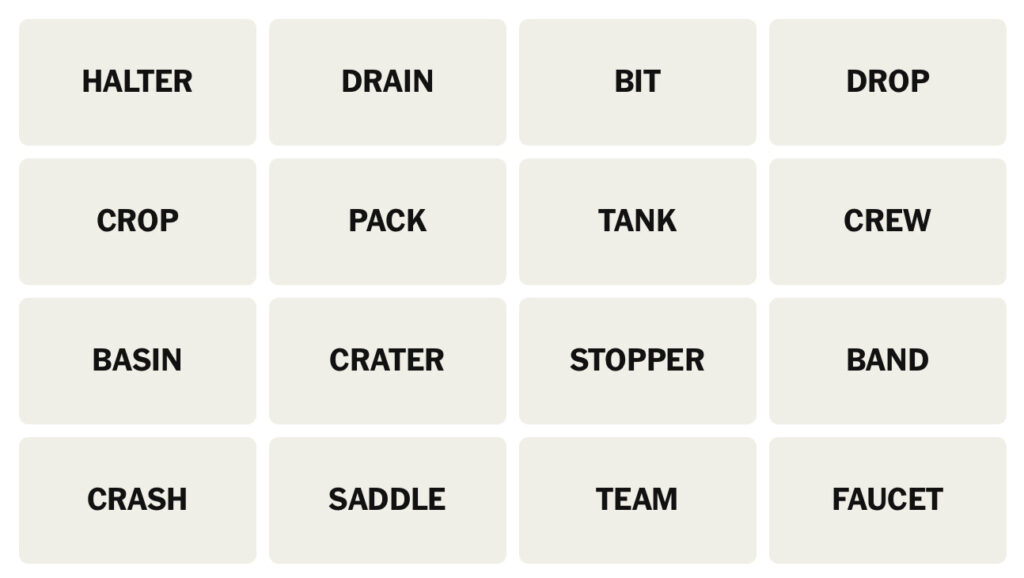
Before we ruin the surprise, let’s try to nudge you in the right direction. Use these hints to spot the patterns yourself.
Hint for the Yellow Category:
Think about basics. This group is arguably the most straightforward. Look for words that describe things you might eat or specific types of a common food item. If you see words that look like ingredients, you are getting warm.
Hint for the Green Category:
This category is all about action. Specifically, think about words that are synonyms for moving or transitioning from one place to another. If you have words that imply “going” or “leaving,” try grouping them.
Hint for the Blue Category:
This one requires a bit of pop culture or niche knowledge. Look at the words that seem like names or specific titles. Do they share a common fictional universe? Perhaps a TV show or a movie franchise?
Hint for the Purple Category:
As usual, Purple is the trickster. Don’t look at the definition of the words. Look at the structure of the words. Try adding a word before or after them. Or, perhaps, they all rhyme with a specific word? Today’s purple requires you to think laterally.
Connections Categories for January 11:
Still stumped? If the hints above didn’t click, the next step is to know the category names. This usually helps clear up the board significantly without giving away the exact word combinations.
Here are the themes for the connections hint jan 11:
- Yellow: TYPES OF PASTA
- Green: SYNONYMS FOR DEPART
- Blue: CHARACTERS FROM “THE OFFICE”
- Purple: WORDS ENDING IN “KEY”
(Note: If you haven’t solved it yet, go back to your game board and see if you can slot the words into these groups!)
Full Answers: Connections Jan 11 Solution
If you are just here to save your streak and move on with your day, here is the complete breakdown of the solution.
Yellow: Types of Pasta
- Penne
- Fusilli
- Farfalle
- Rigatoni
Green: Synonyms for Depart
- Leave
- Exit
- Go
- Split
Blue: Characters from “The Office”
- Pam
- Dwight
- Jim
- Creed
Purple: Words Ending in “Key”
- Don
- Mon
- Tur
- Whis
Disclaimer: Puzzle answers are subject to the specific game board released by NYT for your region. Always double-check your remaining lives!
How to Improve Your Connections Strategy?

Finding the solution is great, but becoming a better player is even better. Connections is distinct from Wordle because it fights back; the editor intentionally places words that could belong to multiple groups to bait you into wasting a guess.
Here are three advanced strategies to use the next time you are stuck looking for a connections hint jan 11.
1. The “Shuffle” Button is Your Best Friend
Our brains are wired to find patterns in proximity. If two words are next to each other on the grid, you might subconsciously force a connection that isn’t there.
Hit the shuffle button repeatedly. Seeing “Apple” next to “Tech” might make you think of computers, but seeing “Apple” next to “Banana” might remind you it’s just a fruit. A fresh perspective often reveals the Yellow or Green categories instantly.
2. Identify the “Fifth Wheel”
The puzzle creators often include five words that fit a category, but only four are correct. The fifth word belongs to a different, usually harder, category.
For example, if you see five words that look like “colors,” stop. Do not guess. Look at those five words and see if one of them has a secondary meaning. That word with the double meaning is usually the one that belongs to the Purple or Blue category. Removing the impostor is the key to solving the easy groups.
3. Solve Purple First (If You Can)
This sounds counter-intuitive, but it is the safest way to play. The Purple category usually relies on wordplay (like “Words that start with STAR”). These are often absolute rules a word either fits the rule or it doesn’t.
Synonym categories (Yellow/Green) are subjective and prone to overlap. Wordplay categories are objective. If you can spot the wordplay trick early, you remove the four hardest tiles from the board, making the rest of the game significantly easier.
Pro Tip: If you enjoy brain teasers like this, you might also want to check out our guide on , which covers similar logic puzzles and daily challenges.
Why Is Connections So Popular?
Since its beta launch in the summer of 2023, Connections has arguably become the second most important game in the New York Times portfolio, right behind Wordle.
It taps into “semantic memory” our ability to remember concepts and general knowledge rather than just vocabulary. While a crossword asks “What is the word for X?”, Connections asks “How does X relate to Y?”
This engages a different part of the brain. It is less about having a dictionary in your head and more about lateral thinking. It is perfect for a quick mental break, but as we saw with the connections hint jan 11, it can get frustratingly difficult.
If you are looking for more ways to sharpen your mind, consider exploring our resources on . Keeping your brain active with variety is the best way to improve cognitive flexibility.
Analyzing Today’s Tricky Words:
Let’s look at why today’s specific puzzle might have caused you trouble.
Often, proper nouns are the biggest stumbling block. In the January 11 puzzle, if you didn’t know the specific pop culture references (like the TV show characters in the Blue category), you were essentially guessing blind.
Furthermore, short three-letter words are notoriously difficult in Connections. They often act as “fillers” or parts of compound words (the Purple category). When you see a grid full of short words like “Go,” “Don,” or “Key,” be prepared for a word-assembly puzzle rather than a definition puzzle.
Common Pitfalls to Avoid:
- Rushing: You have infinite time, but only four mistakes. Take a screenshot and markup the image on your phone before clicking.
- Ignoring the “One Away” Message: If the game tells you that you are “One Away,” stop immediately. Do not just swap one word out and try again. You have likely identified a “Fifth Wheel” situation (as mentioned in the strategy section above). You need to rethink the entire grouping, not just one tile.
Conclusion:
The connections hint jan 11 puzzle was a classic example of how the New York Times balances simple synonyms with tricky wordplay. By breaking the board down into categories and identifying the “trick” category (usually Purple) first, you can save your lives for when you really need them.
Remember, there is no shame in looking up a hint. The goal is to enjoy the puzzle and learn new associations, not to get frustrated. Hopefully, this guide helped you keep your streak alive!
Come back tomorrow if you get stuck again we will have the fresh hints and answers ready for you.
Frequently Asked Questions:
What time does NYT Connections reset?
The New York Times Connections puzzle resets daily at midnight in your local time zone. However, if you play via the News app or specific browsers, it may sync to New York time (ET).
How many mistakes can I make in Connections?
You are allowed four mistakes. On your fourth mistake, the game ends, and the answers are revealed. The goal is to solve the four groups without losing all four “lives.”
Is there a strategy for the Purple category?
Yes. The Purple category is rarely about definitions. It is almost always about word association. Look for:
- Words that can follow a specific word (e.g., “Fire ____”).
- Words that sound like other words (Homophones).
- Anagrams or palindromes.
- Missing letters.
Can I play past Connections puzzles?
Officially, the New York Times does not offer an archive for Connections like they do for the Crossword. Once the day is over, that specific puzzle is gone from the main app. However, there are third-party unofficial archives available online if you want to practice.
Why was the connection hint Jan 11 so hard?
Difficulty is subjective, but today’s puzzle likely relied heavily on a specific “Purple” wordplay mechanic or a niche “Blue” trivia category that many users found obscure. The editor, Wyna Liu, often varies the difficulty to keep players on their toes.
