

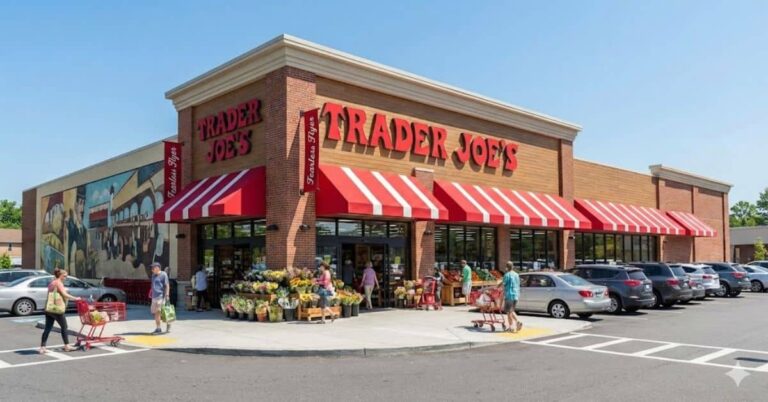
Walking into a Trader Joe’s can feel like entering a different dimension of grocery shopping. You are greeted by Hawaiian-shirted employees, hand-painted signs, and products you’ve never seen anywhere else (Cookie Butter, anyone?). But amidst the charm and the cult-like following, a common question nags at many budget-conscious shoppers: Is Trader Joe’s expensive?
Because the store feels “bougie” and offers gourmet-style products, many assume it carries a price tag similar to Whole Foods. However, the reality is far more interesting.
In this guide, we break down the real cost of shopping at Trader Joe’s in 2025. We will compare their prices against major competitors like Aldi, Walmart, and traditional supermarkets, and reveal exactly which items are bargains and which ones will secretly inflate your grocery bill.
Table of Contents
The Short Answer: Is Trader Joe’s Considered Expensive?
Generally, no, Trader Joe’s is not expensive. In fact, for many comparable items, it is significantly cheaper than traditional supermarkets like Kroger, Safeway, or Publix, and often 20–30% cheaper than Whole Foods.
However, it is not the cheapest option on the market. If your primary goal is the absolute lowest bottom-line price, discount grocers like Aldi and Walmart will almost always beat Trader Joe’s on pantry staples and produce.
Trader Joe’s occupies a unique “middle ground” offering high-quality, unique, and organic products at prices that undercut premium stores, even if they can’t quite match the rock-bottom prices of big-box discounters.
Trader Joe’s vs. The Competition: A 2025 Price Breakdown
To understand if Trader Joe’s is expensive for you, we need to look at who you are comparing them to. Context is everything in grocery pricing.
Trader Joe’s vs Whole Foods:
This is the most common comparison, and the winner is clear. When comparing a basket of similar items organic produce, specialty cheeses, wine, and healthy snacks Trader Joe’s is consistently cheaper than Whole Foods.
Recent price comparisons show that a typical grocery haul at Trader Joe’s can cost roughly 30% less than the same haul at Whole Foods. While Whole Foods dominates in variety and fresh meat counters, Trader Joe’s wins on price for packaged goods and easy meal solutions.
Trader Joe’s vs Traditional Grocery Stores (Kroger, Safeway, Publix)
Surprisingly, Trader Joe’s often beats these middle-of-the-road chains, too. Traditional supermarkets have high overhead costs and carry thousands of slow-moving national brands.
- Olive Oil: Often $1–$2 cheaper at TJ’s.
- Nuts & Dried Fruit: significantly cheaper per ounce at TJ’s.
- Specialty Cheeses: A wedge of brie or gouda at Trader Joe’s is frequently priced lower than the generic deli versions at a standard supermarket.
Trader Joe’s vs Aldi & Walmart:
If you are strictly budget-maxing, this is where Trader Joe’s loses. Aldi (which is distant corporate cousins with Trader Joe’s) and Walmart generally offer lower prices on essentials like eggs, milk, flour, and standard produce.
- Example: A dozen eggs or a gallon of milk will almost always be 10–20% cheaper at Aldi than at Trader Joe’s.
- The Trade-off: You won’t find the same level of gourmet frozen meals or unique seasonal snacks at Aldi that you will at Trader Joe’s.
Why Is Trader Joe’s So Cheap? (The Hidden Business Model)
How does a store that sells Lobster Ravioli and organic wine keep prices low? It’s not magic; it’s a very specific business strategy.
1. The Power of Private Label
Walk down a Trader Joe’s aisle, and you’ll notice that 80-90% of the products bear the “Trader Joe’s” name. By cutting out the middleman and buying directly from suppliers (who often manufacture big-name brands under the TJ’s label), they eliminate the “brand tax” you pay for marketing and advertising.
2. Low SKU Count
A typical grocery store carries about 50,000 items. Trader Joe’s carries only about 4,000. By selling fewer items but in massive quantities, they have tremendous bargaining power with suppliers to drive costs down.
3. No Advertising Budget
You will never see a Trader Joe’s Super Bowl commercial or a glossy magazine ad. They rely entirely on word-of-mouth and their “Fearless Flyer” pamphlet. The money saved on marketing is passed directly into keeping shelf prices stable.
What to Buy? (and What to Avoid) to Save Money)
If you shop strategically, Trader Joe’s is a bargain hunter’s paradise. If you shop blindly, it can get pricey. Here is your cheat sheet.
What to Buy (The Bargains)
- Cheese: This is arguably the best value in the store. You can find high-end imported cheeses for prices comparable to block cheddar at other stores.
- Frozen Meals: From Mandarin Orange Chicken to Indian curries, these are cheaper than takeout and often cheaper than cooking from scratch if you factor in buying all the spices.
- Wine: The famous “Two Buck Chuck” (now closer to $3-$4) and other affordable varietals are unbeatable for table wine.
- Nuts and Dried Fruits: sold in decent quantities at very competitive price points.
- Flowers: Fresh bouquets at TJ’s are famously affordable, often starting at $3.99 or $6.99.
- Seasonings: “Everything But The Bagel” and other blends are priced significantly lower than spice jars at standard grocery stores.
What to Avoid (The “Expensive” Traps)
- Meat and Seafood: While quality is decent, the price-per-pound for chicken breast, ground beef, or salmon is often higher than at Costco or Walmart. You also miss out on “family pack” discounts.
- Produce (Sometimes): Trader Joe’s sells much of its produce by the unit (e.g., “per banana” or “per pack of peppers”) rather than by weight. This can sometimes result in a higher cost than buying loose produce at a standard grocer.
- Basic Pantry Staples: Generic flour, sugar, and baking soda are often cheaper at Walmart or Aldi.
- Vitamins and Supplements: Generally pricier than the bulk options found online or at pharmacies.
Is a Full Grocery Haul at Trader Joe’s Realistic for Families?
This is a common dilemma. Can you do your entire weekly shop at Trader Joe’s without breaking the bank?
For Singles and Couples: Absolutely. The portion sizes (usually tailored for 1-2 people) mean less food waste, which saves money in the long run. The “fun” factor of their snacks prevents you from spending money on eating out.
For Large Families: It can be tricky. Because Trader Joe’s lacks “bulk” sizing, buying enough meat and produce for a family of five can quickly become more expensive than shopping at a warehouse club like Costco. Many families use a hybrid strategy: buy meat and basics at Costco/Aldi, and hit Trader Joe’s for snacks, frozen meals, and specialty items.
Conclusion:
So, is Trader Joe’s expensive? No provided you know how to shop. It offers a “luxury feel” at a mid-range price point. It bridges the gap between the bare-bones experience of a discount grocer and the premium pricing of a health food store.
If you are tired of overpaying for organic food or want to spice up your meal prep without spending “Whole Foods money,” Trader Joe’s is likely a budget-friendly win for your household.
Frequently Asked Questions:
Is Trader Joe’s cheaper than Walmart?
Generally, no. Walmart has lower prices on pantry staples, cleaning supplies, and bulk produce. However, Trader Joe’s is competitive on specific organic items and specialty snacks that Walmart may not carry.
Why is meat so expensive at Trader Joe’s?
Trader Joe’s does not have an in-house butcher, so all meat arrives pre-packaged. You are paying for the convenience of the packaging and the lack of “bulk” discounts. For the best meat prices, local butchers or warehouse clubs are usually better options.
Does Trader Joe’s have sales or coupons?
No. Trader Joe’s famously does not offer sales, loyalty cards, or coupons. They claim their prices are already as low as possible every day. This “Everyday Low Price” strategy saves you the hassle of hunting for deals.
Is produce at Trader Joe’s good quality?
It varies. Because much of it is pre-packaged in plastic, you cannot always inspect every single item (like a single pepper inside a bag of three). Turnover is high, so it’s usually fresh, but it is wise to inspect packages carefully before buying.
