

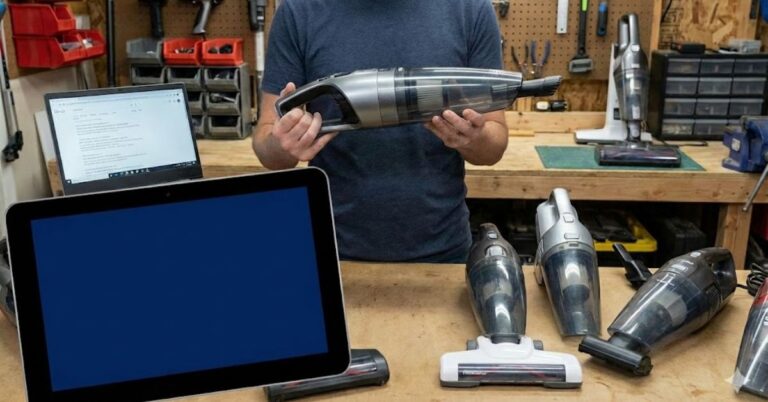
There is nothing more frustrating than a vacuum cleaner that makes a lot of noise but picks up zero dirt. Whether you are trying to get dog hair off the sofa or crumbs out of your car seats, weak suction just doesn’t cut it. You need the most powerful handheld vacuum to get the job done right the first time.
But with hundreds of options on the market, how do you know which one actually has the muscle? Manufacturers throw around terms like “volts,” “amps,” and “air watts,” making it confusing to compare them.
In this guide, we cut through the marketing fluff. We will explain exactly what makes a vacuum powerful, which technical specs actually matter, and what to look for if you want a machine that refuses to quit.
Table of Contents
Why Suction Power Matters More Than You Think?
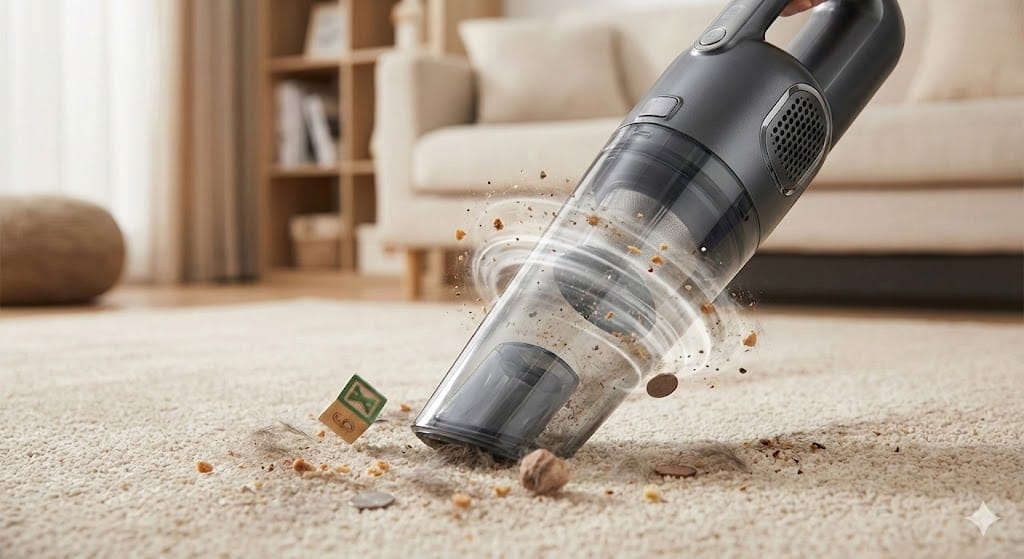
When we talk about the most powerful handheld vacuum, we aren’t just talking about a luxury feature. High power is a necessity for specific types of messes. A weak vacuum might pick up loose dust on a hardwood floor, but it will fail miserably at:
- Embedded Pet Hair: Fur weaves itself into fabric fibers. Only high suction can lift it.
- Car Interiors: Carpets in vehicles hold onto sand and dirt tightly.
- Heavy Debris: Things like cat litter, cereal, or small pebbles require significant airflow to lift into the dustbin.
If you have ever had to go over the same spot five times, you weren’t using a powerful enough machine.
Decoding the Specs: What Makes a Vacuum “Powerful”?
Before you buy, you need to understand the numbers on the box. Most people look at voltage (e.g., 20V vs. 12V), but that only tells you about the battery size, not the cleaning performance.
To find the true heavyweights, look for Air Watts (AW) and Pascals (Pa).
1. Air Watts (AW)
This is the most accurate measurement of vacuum power. It combines airflow and suction.
- Standard Handhelds: Usually offer 15–25 AW.
- High-Performance Handhelds: Range from 80–100+ AW.
- Pro Tip: If you want the most powerful handheld vacuum, look for a model with at least 90 AW.
2. Suction Pressure (Pa)
Measured in Pascals, this indicates how strong the vacuum’s “pull” is. A rating of 5,000 Pa is decent, but the top-tier models often exceed 15,000 Pa.
If you are researching reviews, don’t just look at the brand name. Check the specs. For a deeper dive into cleaning specs, you can check our guide on understanding vacuum suction ratings.
Top Contenders for the Most Powerful Handheld Vacuum:
While models update every year, a few distinct categories always lead the pack in terms of raw power.
The Cordless Giants: (Dyson & Shark)
When it comes to pure innovation, brands like Dyson and Shark usually sit at the top. The Dyson Humdinger (and similar models in the V-series) is often cited as the gold standard. With Cyclonic technology, these vacuums spin dust away from the filter, ensuring the suction doesn’t drop as the bin fills up.
The Shop-Vac Style: (DeWalt & Milwaukee)
If you don’t care about aesthetics and just want raw, industrial power, look at tool brands like DeWalt or Milwaukee. These often use the same battery packs as power drills. They are bulkier and louder, but they are undeniably some of the strongest options for garage and workshop use.
The Pet Hair Specialists: (Bissell)
Some vacuums are engineered specifically for torque rather than just airflow. The Bissell Pet Hair Eraser series uses motorized brush rolls to agitate the carpet while sucking. This combination mimics the effect of a high-performance vacuum in a smaller package.
Key Features to Look For (Beyond Just Power)
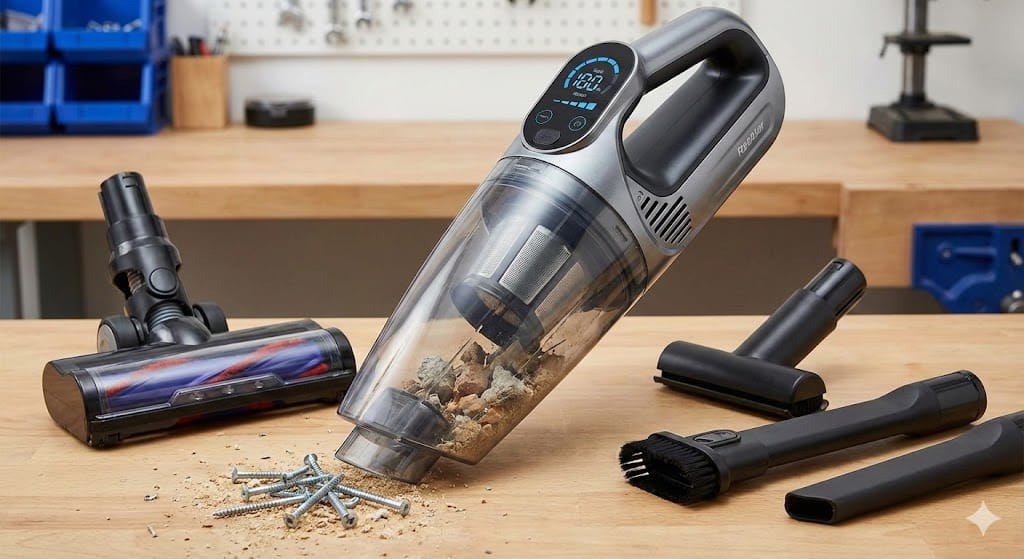
Finding the most powerful handheld vacuum is the main goal, but power is useless if the battery dies in two minutes. Here is what else you need to consider.
1. Battery Life vs. Boost Mode
Most high-power vacuums have a “Boost” or “Max” mode. While this delivers incredible suction, it drains the battery fast usually in under 8 minutes. Look for a vacuum that offers a “Fade-Free” Lithium-ion battery. This ensures the suction stays strong until the very last second, rather than slowly getting weaker as the battery drains.
2. Filtration Systems (HEPA)
A powerful motor sucks in a lot of air. If the filtration is poor, it will blow fine dust right back into your face.
- HEPA Filters: Capture 99.97% of particles. Essential for allergy sufferers.
- Washable Filters: Save you money in the long run.
3. Dustbin Capacity and Emptying
High suction picks up a lot of debris quickly. A tiny dustbin (under 0.2 liters) will fill up in seconds. Look for “One Touch” emptying systems so you don’t have to touch the dirt with your hands.
Wired vs. Cordless: Which is Stronger?
Historically, corded vacuums were always stronger. However, battery technology has closed that gap. Modern lithium-ion batteries can now discharge energy fast enough to match corded motors.
- Corded Handhelds: Unlimited runtime, generally cheaper, very high consistent suction. Best for detailing cars in a garage.
- Cordless Handhelds: Ultimate convenience. The top-tier models now match corded power for short bursts (15-20 minutes).
If you need portability for quick spills in the kitchen or living room, go cordless. If you are detailing a minivan full of sand, a corded model might save you from charging frustration.
Maintenance: Keeping Your Vacuum Powerful
Even the most powerful handheld vacuum will lose suction if not maintained. It is rarely the motor’s fault; it is usually a blockage.
- Clean the Filter: A clogged filter restricts airflow immediately. Wash it monthly.
- Check the Flap: Many handhelds have a rubber flap at the inlet to stop debris falling out. Make sure it isn’t stuck with hair.
- Empty Often: Don’t wait until the bin is packed tight. Air needs to circulate inside the bin for cyclonic suction to work.
Conclusion:
Finding the most powerful handheld vacuum comes down to checking the Air Watts and battery voltage, not just the price tag. Whether you choose a high-tech model from Dyson or a rugged tool-brand vacuum, prioritizing suction power ensures you buy a tool, not a toy.
Invest in a vacuum with at least 80-100 AW if you have pets or heavy messes. It might cost a little more upfront, but the time you save by not having to vacuum the same spot twice is worth every penny.
Ready to upgrade your cleaning arsenal? Browse our latest recommendations or check out our other reviews to find the perfect match for your home.
Frequently Asked Questions:
What is a good suction power for a handheld vacuum?
For light cleaning (dust/crumbs), 15–30 Air Watts (AW) is sufficient. However, for a vacuum to be considered “powerful” and capable of lifting pet hair or sand, you should look for 80 to 100 AW or at least 15,000 Pascals (Pa) of suction pressure.
Which handheld vacuum has the strongest suction?
While models change frequently, the Dyson Humdinger and the Shark WANDVAC PowerFins are consistently rated as top-tier for suction. For industrial use, the DeWalt 20V Max offers incredible raw power for heavy debris.
Are handheld vacuums worth it for pet hair?
Yes, absolutely. But you must choose one with a motorized brush tool. Suction alone often isn’t enough to pull hair out of fabric; the motorized brush agitates the fibers to lift the hair so the powerful suction can remove it.
How long do powerful handheld vacuums last on a charge?
This is the trade-off for high power. On “Max” or “Boost” mode, most powerful handheld vacuums last 6 to 10 minutes. On standard mode, they typically last 20 to 40 minutes. This is why they are designed for quick cleanups, not whole-house cleaning.
Can I replace the battery in a handheld vacuum?
It depends on the model. Some brands (like Shark and various tool brands) offer swappable battery packs, which is a great feature. If the battery dies, you just click in a new one and keep cleaning. Many budget models have built-in batteries that cannot be replaced.
